PYP Coffee Morning: Understanding How Children Learn Through the IB Primary Years Programme
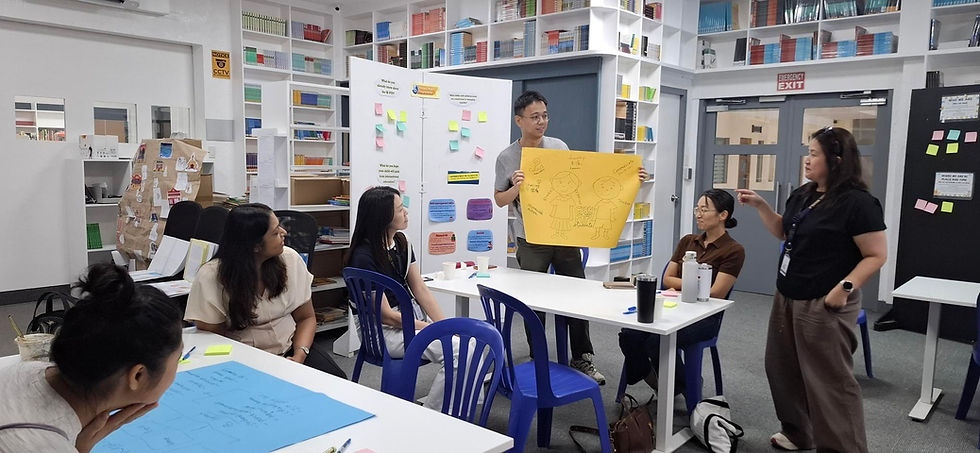
On 22 October 2026, German European School Manila (GESM) welcomed parents to its annual PYP Coffee Morning at the school's Library Extension. Held each school year, the session offers families an opportunity to learn more about the International Baccalaureate (IB) Primary Years Programme (PYP), its approach to education and how it supports children's development both inside and outside the classroom.
The discussion explored how the PYP encourages students to take an active role in their learning. Rather than focusing solely on memorising information, the programme promotes inquiry, critical thinking and the ability to make connections between different subjects and real world experiences. Through classroom discussions, collaborative activities and independent exploration, children are encouraged to ask questions, express their ideas and develop their own understanding of the world.
Parents were also introduced to the IB Learner Profile, which outlines ten attributes that help students develop as curious, knowledgeable, caring and responsible individuals. These qualities are incorporated into everyday learning and encourage children to consider different perspectives, communicate effectively and approach unfamiliar situations with confidence. Beyond academic development, the session highlighted how the PYP prepares children for an increasingly interconnected world. By developing independence, adaptability and an awareness of others, students build skills that can support them throughout their education and everyday lives.
The Coffee Morning also provided an opportunity for parents to ask questions and better understand the learning experiences their children encounter at school. These conversations help families recognise how classroom activities contribute to their children's broader development and how learning can be supported at home.
Through gatherings such as the PYP Coffee Morning, GESM aims to strengthen the relationship between parents and educators, encouraging families to remain involved in their children's learning and development throughout their primary education.



Comments